Houdini Wind Jacket - Once upon a time I lived in the town of Appleton, WI, home of paper mills and the birth place of Harry Houdini. The man could get out of ropes, but he won't be escaping from his fame any time soon. In fact, Houdini's name lives on even amongst outdoor enthusiasts in the form of an almost legendary wind shirt from Patagonia. Read the reviews and you'll discover this 4 oz. wonder is up there in the essentials of many travelers for good reason.

Looking smug in the loo.
Mine came in last night and I'm initially very pleased. At first I was concerned about sizing; Patagonia's online chat agent recommended medium, but I went with my gut and purchased small. Glad I did, fits like a charm! I'm nearly 6' 1" and a trim 160 lbs. Small sizes usually fit my chest and waist well, but come short on length. Happily, the sleeves of the Houdini fall just right and the length works well with my longish torso.

It fits my slender frame rather well.
I'm hoping to get three season use out of the wind shirt in combination with an ultralight umbrella, unless expecting heavy rain. Then out comes my North Face Venture. Happily, the Houdini shaves off six ounces and seems to breath much better.

With the hood. (I normally wear a hat, too.)
Nano Puff Pullover - My first impression is a well sustained "nice." The Nano Puff is a marvel of compact, warm lightness crossed with downright good looks. I have an 850 fill-power down jacket (North Face) for winter or base camp use, but Patagonia's Nano Puff is coming in for three season use in combination with the Houdini and regular base layers. The Nano weighs about 9 oz. and has a wonderful hand. Synthetic fill will probably fare better in Spring and Autumn showers. Best of all, it packs so ridiculously small for the 80% of the time I'm on the trail and too hot for it.


All packed up!
2010 - Oceanside, CA
I realize lots of ultra-lighters swear by single 5 or 10 lumen LED key chains running on minuscule button-cell batteries. These ounce-counters (I am to an extent one of them) are thinking about weight more than function. Usually that works for lighting. They get up at dawn and go to sleep not long after sunset, worn out from the day's hike. But they might not be thinking about safety or versatility.
If an emergency -- snake bites, bear attacks, or your partner's cardiac arrest-- requires you to evacuate an area during eight or ten hours of darkness, it will be maddening trying to navigate trails with that tiny light. Again, if a person is seriously injured and must be attended to in the field that dinky light will draw out curses. It might just be a lost item that needs to be found in a large area, or an unexpected poker game in the back country.
Many people choose to go with headlamps for this reason. Some headlamps are very small and even feature-rich, such as the 1 oz.
 Petzl E+Lite, but again, might not be very bright (the E+Lite claims 16 lumens). Brighter headlamps packing 40-80 lumens can be prohibitively expensive and usually require several batteries in an attached pack. Weight savings and chances of equipment failure might rise with the complexity.
Here is my system (which may not work for you):
First, let me say that I always like to have a red LED of some sort because it doesn't disable night vision while reading maps or doing tent chores. Red usually gets the job done on minimal power, without disturbing snoozing mates. However, I liked a white LED for reading when solo, and as a backup for navigating trails at night. I used to employ two iNova keylights for this purpose, which combined to weigh a scant .7 oz.
However, I am switching over to the Petzl E+Lite simply because for a negligible .3 oz. more I'll get:
__- waterproof to 1 meter, or all the rain in the world
__- headband strung around my neck at all times (I lost 2 iNovas on one trip)
__- white AND red LEDs, and strobe modes
__- has built in clip options to go strapless
__- 3 times the lumens of my iNova
Ironically, I plan for this to be my backup -- you WANT backup light -- because I don't like plowing through expensive coin-cell lithium batteries and mostly use this for the never-ending red LED.
Now to what I alluded to, and the purpose of my post:
The light which sees a lot of daily use and gives me serious photon power in the field is almost unknown to the backpacking world: the 4Sevens Quark AA R5 flashlight.
Before listing the specs, I'll mention why I love it. First, the thing is lighter than most headlamps, but packs a range of modes, ranging from the oh-so-useful
 .2 lumens moonlight mode all the way to 109 lumens! You can light only the sentence of a book, or blast beams into dark side like Han Solo. As for handling, the Quark is svelte but purposeful, with beefy knurling for grip. A reversible clip allows it to clench hat brims, and it can tail stand with a diffuser tip to be a powerful camp lantern. It's seriously rugged with aircraft-grade aluminum and glass, with an IPX-8 rating, AKA waterproof to 3 meters, and features both SOS and self-defense strobe modes. Last, the Quark uses one of the latest high-efficiency LEDs. The manufacturer rates the run time conservatively, for alkalines. With lithium batteries, you might get double these times:
__- Moonlight: 0.2 lumens for 10 days or 240 hours (1ma)
__- Low: 4 OTF lumens for 2 days (10ma)
__- Medium: 22 OTF lumens for 6 hours (50ma)
__- High: 85 OTF lumens for 1.5 hours (250ma)
__- Max: 109 OTF lumens for 1.2 hours (350ma)
__- Strobe: 109 OTF lumens for 2.5 hours
__- Beacon: 0-109 OTF lumens pulse for 18 hours
Now for the rest:
__- Weight: 1.8 oz. (AA Lithium battery brings it to 2.3 oz.)
__- Length: 3.8 inches
__- Diameter: 0.86 inches
__- LED Emitter: Premium Cree XP-G R5
__- 5 Current Regulated Output Levels
__- 3 Flash modes: Strobe, SOS, Beacon
__- Square threads for lifetime smooth operation
__- Type III Hard Anodized finish
__- Reversible/Removable Clip
__- Reversible/Removable Clip
__- Impact-resistant glass lens with Dual-coating - sapphire coating on the outside and anti-reflective coating on the inside for optimal efficiency and durability.
__- T-6061 Aircraft-grade Aluminum Body
2010 - Oceanside, CA
Ultralight Joe is a gran'daddy in the ultra-light world - a world I feel increasingly drawn to. His recipe for Moose Goo is something I'm thinking of incorporating on future treks, particularly the JMT.
Here is the recipe page in full:
Ultralight Joe's Moose Goo
NOTE: If you pass this around to your friends, I have but one request - please refer to it as "Ultralight Joe's Moose Goo". Since I run this site anonymously, it's not an ego thing. I just get a kick out of
hearing it mentioned on the trail, let's me know I'm contributing to my fellow trekkers. A simple pleasure, perhaps, but I take what I can get. :-) Thanks!
Basic Recipe:
Single Squeeze Tube Proportions (2-3 lunches w/ large tortillas):
- 2 parts honey
- 2 parts corn flour (NOT corn meal! I plan to try sweet rice flour soon.)
- 1 part peanut butter (preservative-laden)
- Mix thoroughly, will take some time.
- Pack into Coghlan's Squeeze Tube (REI, Campmor, etc), or in cold weather wrap in wax paper.
Per tube:
- 8 tbsp honey
- 8 tbsp corn flour
- 4 tbsp peanut butter
- 1320 calories
- 172g carbs (70 simple, 102 complex)
- 24g protein
- 38g fat (That's a high proportion of fat, but what the heck...)
BEWARE! Below 40F, Ultralight Joe's Moose Goo becomes impossible to squeeze out! I open the tube from the back and spoon it out when that happens. For snow camping I pack it in wax paper instead, eat it like a candy bar, or pre-pack it into tortillas.

What items do you keep on your person at all times? Cell phone, keys, Tic-Tacs? Unknown to most people, there is an underground culture of (mostly) men who obsess over honing down and filling out their personal setup to a state of circumstantial perfection. They indulge the mystery and excitement found in seeking and discovering just what pieces of gear really improve one's productivity and potential to react in various events, without significantly increasing weight or appearance. The goal is efficiency; to be prepared without looking like a Transformer. While much of the world walks around like three-piece cutlery sets -- fork, knife, spoon -- afficianados of this quest want to be precisely engineered Leathermans or Swiss Army Knives. We call these borderline compulsives "EDC (Every Day Carry) fanatics" I sit on the verge of their world, a universe not interested in have lots of things so much as having the right things.
Anyways, I think from now on I'll keep you updated with a list of what goes into my EDC. This will include my current setup, and my ideal setup, along with some alternate scenarios. This is apparently my quirky and perhaps pitifully dweebish sense of fun... but it might save your life someday when we're trapped in a sinking car and I have a seat belt cutter in my bag (as I do).
Current EDC List (as of 2010)
Items are divided into two groups: Body Carry and Bag Carry. I almost always have a Tactical Bag with me, whether going for coffee, church, or work.
Body Carry
__Key Chain: Safety whistle (black flute)__
__Phone: Nokia candybar freebie
__Primary Light: Fenix LD20 AA2 (16-206 Lumens / Strobe)
__Backup Light: iNova LED keychain light (Low-high-flash)
__Knife: Buck Pilot
__Watch: Casio Illuminator Watch
__Tactical Belt: 5.11 Tactical 1¾ Operator Belt (Coyote)
__Sunglasses: Generic junkers I found on Amtrak
Bag Carry
__Tactical Bag: Bail Out Bag (Shoulder Sling)
__Water Bottle: Contigo 750ml
__Camera: Canon G11 / Canon 40D (Depending on plans)
__Pen: Lamy Safari Fountain Pen
__Multi-Tool: Leatherman Charge TTi
__Net Reader: iPad
__Music: iPod 3RD Gen
__Audio Recoder: RCA Digital Voice Recorder / Zoom H4N (depending on task)
__Fire Tool: Bic Lighter + Match Book
__
__
__
EDC items I might like to add or swap
__Tactical Bag: Maxpedition Fat Boy Sling
__Primary Light: 4Sevens Quark AA R5
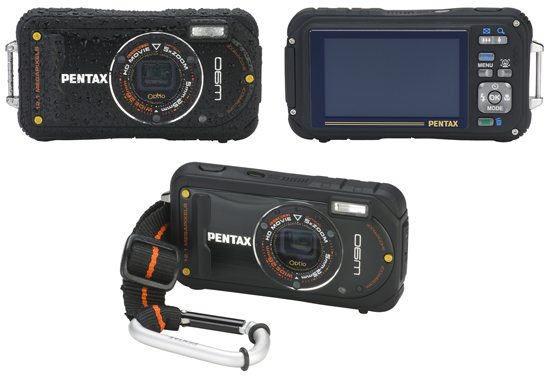
__Camera: Pentax Optio W90
__Ultralight Net Reader: iPod Touch 4th Gen.
__Pen: Schrade Tactical Pen Matte Black / Rite in the Rain Bullet Pen Matte Black
__Knife: Benchmade 551 / 551H20 Griptillian
__Watch: Casio G-Shock DW5600MS-1
__Phone: something with a camera!
__Paracord: 50' TruSpec #550
__Fire Tool: Zippo Shell (Matte Black) w/ Thunderbird Butane Insert + Match Book
__Audio Recorder: Sony ICD-PX820
__Medical Kit: Adventure Medical .5
__Compass: TruSpec Pocket Compass
__Firearm: Perhaps a CV 9mm or even Ruger LCP
__Two-way Radios: Note sure. Could be good for group hikes, one for the pointman and one for the tail guard.
I'm just throwing this list here, too, for my own convenience...
Backpacking & Touring Gear I have an eye on...
__Wood Stove: Vargo Folding Titanium Wood Stove / Wind Screen
__Isobutane Stove: Snow Peak Giga Power or Monatauk Gnat
__Ultralight Net Reader: iPod Touch 4th Gen.
__Fire Tool: Fire Steel or Misch Metal Rod
__Trek Poles: Black Diamond Trail Ergo Cork
__UL Tent: SMD Lunar Solo Enhanced
__Paracord: 50' TruSpec #550
__Pen: Rite in the Rain Bullet Pen Matte Black
__Notepad: Write in the Rain Memo Book
__Pack: ULA Catalyst or SMD Traveler
__Rain Jacket: Patagonia Torrentshell
__Convertible Pants: Merrell Bison
__Technical Fleece: GoLite Vermillion Thermal
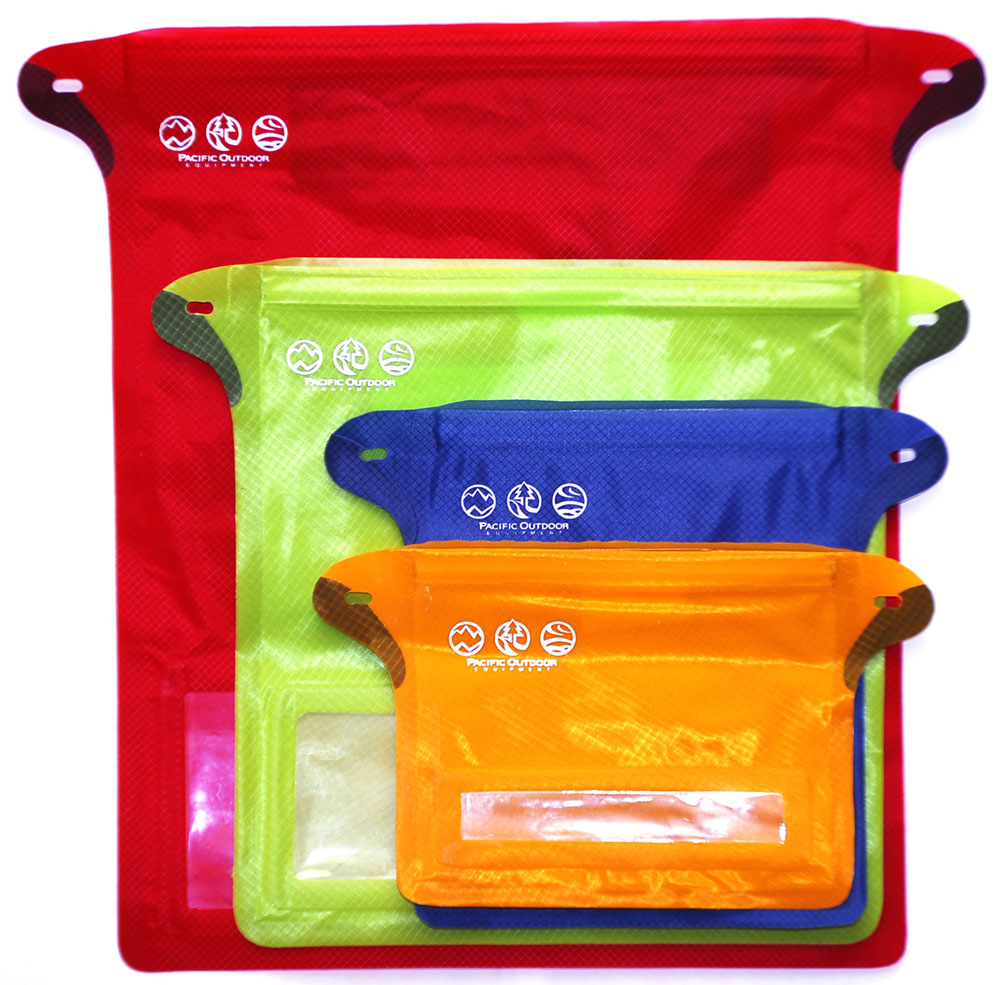
__Waterproof Baggies: Pacific Outdoors Zip Pnuemo or Alako Sacks
__Water Purfier: Steripen Traveler or Opti + Katadyn Micropur Tablets
__Pack Cover: Sea to Summit Sn240
__Trek Shoes: Patagonia Drifter AC, Nine Trail, or Tsali, orNew Balance 875
__Summer Bag / Winter Liner: American Medical Bivy
__Base Layer: Patagonia Capilene 1
2010 - Oceanside, CA
 choose boil-in-a-bag meals to reduce weight, but Ryan wants options. Knowing I am a fan of the Trangia, he wrote,
"You see, the minimalists approve of the Trangia... But it appears that ONLY the minimalists approve of it. People who are willing to spend money, carry a little extra weight, and actually cook REAL food seem to buy something else... Am I buying a stove that is going to be VERY hard to cook ACTUAL food with? I remember boiling water but I'm a bit sketched out as to whether that little thing will actually cook food. Give me your second alternative in the stove world (that ISN'T geared for the uber-minimalist) so that I have something else to consider."I disagree with the above statements, and in this instance experience is on my side. But before saying anything else, I strongly recommend all travelers familiarize themselves several times with whatever equipment you purchase before an actual trip. Cook multiple meals on your system and be sure of how it functions. Not working? Return it, try again.
For myself, I have gotten used to eating "real food" meals in stages, owing to just one burner. With groups, I might bring two stoves and cook on both at once. I know how to use Trangia simmer rings, and how to snuff the flame and refuel when necessary. Be familiar with whatever system you use, especially in windy conditions.
I'll spare the repetitive pitch about Trangias, though mentioning that I, a Swede, and a German cooked a mash of bacon, onions, and noodles (a strange trans-national goulash, if ever one was) over their Trangia (yes, they had one as well) without issues. I will also skip telling stories of hearty soups I've made from diced potatoes, carrots, onions, and vegetable stock; tangy stir fry, or of beer basted bratwurst and piquant saurkraut that could be had with that venerable flame.
But, truth be told, I am also in the market for an alternative stove. I want faster boil times, like 3 minutes instead of 8 or 9. One which allows simmering - some, such as the famed MSR Whisperlite, are poor at this culinary essential. A gas stove can meet these needs. For middle-length trips (7-12 days) gas systems can even weigh less than alcohol and fuel, when long burn times are needed for simmering.
But let it be said, I still stand by alcohol as the preferred bomb-proof solution for multi-month trips. No parts to break. Your food is your strength, and if you need fire to melt snow for water, your system had better be reliable and fast.
So, I have my eye on the Snow Peak Giga Power stove. It has four pot supports instead of the usual three, and is thus more stable for cooking things besides water
 (Yes, I've spilled pots before, and my whole dinner perhaps once). The Giga Power folds smaller than the MSR Pocket Rocket and has a piezo igniter. Still, bring alternative ways of lighting fire.
Here's a review from someone I respect, and here's another good introduction to stoves from REI.com.
Be forewarned, altitude and cool temps (35oF and below) are not friends of gas fuel. This may translate into less efficient use of canisters, and difficulty with piezo systems. Keep your canisters warmed in your sleeping bag or pocket in low temps.
Notable portions of reviews I read:
"The real issues started when we camped at 12,000ft and the weather got windy and cold. The Piezo ignitor would not work and we had to use matches. The stove heated water fine but consumed fuel at an alarming rate, burning through a 110g canister over the course of 3 meals (my old Whisperlight would last 2-3 days of meals, in comparison). My buddy's Jetboil stove consumed much less fuel and I ended up bumming an unused fuel can from him towards the end of our trip... I'm considering a liquid fuel stove for my future higher altitude, cold weather adventures." [Regarding the Soto Regulator Stove]What do you think?
"My only recommendation for those who don't already know, keep the gas canisters in the sleeping bag with you and you won't have trouble starting it in the morning (This is a gas canister issue and not anything to do with the stove)."
"I used it again this weekend and it’s really great for a short section hike where you don’t have to worry about fuel cannister resupply. Incredibly easy to light with the piezo ignition and it boils water fast. I’ll probably still use alcohol for longer hikes, but it’s nice not to have to fuss around with lighting this stove."
If this article was helpful to you, please share it with others. Thanks!
Oceanside, CA
For the backpacker who needs some basics and has a little bit of green in his pockets, here are some items high on my list of recommendations.
Lighting:
I recommend using one sturdy, bright multi-task LED (doubles as headlamp / lantern) and one keychain LED backup:
Main: 4Sevens Quark AA or AA2. Don't faint at the price: this light is bomb-proof, water-proof to 12 feet, and can outshine most lanterns. I use them cycling, and carry one at all times. Both models weigh about the same before batteries, but the 2AA model is twice as bright. Though otherwise nearly identical, the most important feature which sets 4Sevens Quark lights above current Fenix models is moonlight mode (.2 lumens) which allows you to read discreetly without waking up others, and do other clandestine things. The benefit the 2AA model is a sure grip and less need to carry spare batteries separately on long trips. The upside of the 1AA model is that it is smaller and thus weighs less, and with the included clip, can be more easily clipped to the bill of a hat. Free shipping from 4Sevens.
Backup: iNova LED keychain - This light is not so feature-full as the Photon Freedom, but in my experience it is more durable and convenient. Three modes: low-high-flash.
Air Pad:
Backpacking on poor sleep is not fun, and your pad makes a big difference. If I had just one pad, the Big Agnes Air Core 2.5" might be the one. Unlike self-inflate pads, this takes a few minutes to fill but you'll get seven or eight superb hours of rest. I've never felt the bumpy ground beneath my pad. It's truly more comfortable to me than most bed mattresses. Combined with a closed-cell foam pad, it works well in the snow.
Stove:
Bomb-proof alcohol stove. Meet the Trangia West Wind - No frills, just works. Runs on Denatured Alcohol available everywhere. For weekend trips I bring a 5 .oz bottle, similar to this. One ounce per basic meal. If all you do is boil water at high altitude, or sub-freezing temps, you may prefer a MSR Pocket Rocket.
Cook Gear:
If you mostly boil water for your meals, go for the GSI Soloist. Mine has been great. If you want more culinary freedom to branch out or aspire to make friends, nothing beats the GSI Pinnacle Backpacker for the price. Saute vegetables, cook pasta, fry meat and eggs, or make pop corn with ease.
Sleeping Bag:
Unless you're a specialist, I recommend synthetic over down. While weighing a bit more, it works while wet -- and you can bet the day you buy a down bag, your tent will leak. Also, I suggest that if you only own one bag, you get one rated for 15o or 20o one. Why? Because you can use it closed in Winter with a liner, or by itself in Spring and Autumn. During Summer, use it open, or like a quilt, if at all.
I purchased a Mountain Hardwear Lamina 20o because of a sale, but I recommend any of these Marmot, Mountain Hardwear, or REI bags. Don't let the price fool you, they are all great. (Note, these are the long models, which I suggest for anyone 5'10" and taller. Then you can put a pillow inside, and keep some gear warm at the end, like batteries.)
Rain Gear:
An absolute must. Rain gear not only helps protect you from getting soaked (read: dying of exposure) but functions as a wind breaker. Often I have a North Face Venture jacket on the outside, with fleece under. As things warm up from activity, the fleece comes off but the rain jacket stays on to block wind. I zip or unzip to regulate heat flow. Other jackets include the Patagonia Torrentshell and Marmot Precip, though I'm not a fan of the Precip shape and have heard mixed reviews. For pants, I use the Northface version. For budget-minded folks, these Helly Hanson Voss' are bomber, but I hear don't breathe as well.
Wind Layer:
In order to block wind, fleece has to be really thick which means you can overheat. Imagine riding a cycle up and down hills in 50o weather. Cold wind on your chest and arms going down, but a burning workout on the climbs. Now imagine hiking into cold winds. Do you want a warm chest and a sweaty back from thick fleece, or a comfortable back with a cold chest, without the fleece? Instead of thick fleece consider a wind shirt like the REI OXT Airflyte or Outdoor Research Ferrosi Hoodie, layered over a medium fleece when needed.
Primary Insulation Layer:
The key is workable layers, based on activity. The ones I brought for my last cycling trip were over-kill for the temps I was in (30o-65o). If you are going to be active in reasonably cold weather, you'll want an insulating layer thin enough to shed heat and sweat, but still keep you warm in adverse climates. This Marmot fleece is a good bet, or this REI Muir Woods version.
Down Jacket (DJ):
If you'll be hanging out in camp for hours and hours in cool weather, bring a lightweight DJ as well, instead of one thick fleece. I like the North Face Nupste. Yes, it's expensive but comes with a lifetime warranty and does the job. I've worn just my down jacket and a t-shirt below freezing, and felt fine. I also wear it in my sleeping bag, making my 20o bag into a 10o bag. Thing is, you don't want to wear a DJ while backpacking because moisture and down are not friends.
Base Layers:
I realize I'm not with the cool kids on this one, but if I'm not being really active then I wear cotton or wool. Just plain old T-shirts during warm weather, and light thermals in colder areas. Why? Because it doesn't smell so bad (my experience) as polyester and spandex, like Under Armor. I also wear the Target Merona brand thermal bottoms if necessary, wool or cotton.
Pants:
I like convertibles well enough, but usually just wear Mil-spec pants like these 5.11 Tactical Pants, which can be rolled up if I'm warm. I like the durability and assortment of pockets. I wore the same pair for about 80 straight days while cycling and backpacking the Pacific.
Trekking Poles:
I jacked my knees and ankles up largely because I was climbing and descending without good support. I strongly recommend selling a kidney to purchase adjustable poles. So far as I know, these Black Diamond Trail Ergo's have the best price-to-rating ratio. They can save your life on a slip!
Weather Radio:
Before setting off on my cycling trip, I wondered if bringing a weather radio was excessive. Not at all! Often without cell or internet access for days, I depended on my Sangean DT-40 to get hourly and weekly reports during the fast changing storm patterns that hit the North West. Weight was small, battery life was great, and I found myself preferring radio to my iPod, since it gave me a sense of community on lonely stretches of highway. I liked having the news, too.
Digital Voice Recorder:
I love journaling and enjoy the classic feel of pen on paper, but not while backpacking. For active sports I prefer digital recorders because I don't have to stop moving to take note of ideas and melodies that comes to mind. Check your .mp3 player and cell phone; either might have a recording mode. Also check Craig's List or Ebay. People often sell to upgrade, since recorders can be expensive.
If you want something dedicated you'll need to decide whether you want super quality or something that just gets the job done:
Lowball: The Sony ICD-PX820 is a bit pricey, but is simplicity itself. Unlike cheaper recorders, it outputs to convenient .mp3 via drag-and-drop USB, like a generic flash drive. While limited to monaural recording, it will suffice for simple voice tasks and introduce you to the medium. I keep one on me at all times for memos and interesting conversations.
Fancy pants: Either the Sony PCM M-10 or Olympus LS-10. Both feature stereo recording and very high quality, which can be nice for resurrecting memories of campfire talks or nature sounds. The Sony has three times better battery life and does more, but is slightly larger (deck of cards) and costs more. Both are good enough to begin an effort into pod casting.
Still wondering about particular gear? Feel free to ask!
Oceanside, CA
For those who wonder what has happened, I'll set you at ease with a tiny post. Basically, I had a fast-paced ride through the rest of Washington and Oregon, and on down to San Francisco. In total, I logged around a thousand miles in sixteen days. And then my Achilles tendons gave out, and I was diagnosed with an infection of Lyme Disease from a tick bite. Strong doses of Doxycycline suggested I call the Golden Gate my finish line, but by that time I had learned what I had come to learn. I was ready, without feeling cheated.
Now I am back in Southern California, attempting to finish a manuscript of my journey before the end of September. We'll see how that goes.
Until my next adventure, thanks to all who have supported my travels, inward and outward!
Oceanside, CA
If you think no spoon is worth $10, you have not lived the life of a backpacker. I bought this lengthy wonder just before setting off on a sixty day bicycle tour. It became one of my most essential items.

The good: Despite the length, the spoon weighs a feather weight .3 oz. This is achieved by coating an aircraft-grade aluminum frame with an anodized shell that makes it safe for eating and tough enough to scrape pots and pans with. Unlike shorter utensils, the long handle allowed me to stir deep pots of boiling water or soup without singing my gloves or hands, and to eat without making a constant mess of myself. At first glance the bowl seemed shallow for soup, but worked out great, especially for boil-in-a-bag stews.
The bad: Well, it's long. Some thought might be necessary for stowing it in compact kits. Also, it's a wee bit dainty. In the first ten minutes I accidentally bent the bowl where it met the handle to a severe angle (I don't know how) but after bending it back, the only damage was a cosmetic line or crease where it had bent.
Anyways, I highly recommend such a lengthy spoon to anyone who spends a good deal of time cooking outdoors. Nine out of ten of my meals required no other utensil.
More info from Moosejaw.com:
The AlphaLite Cutlery by Sea To Summit uses a durable hard-anodized aircraft grade aluminum combined with a sleek-yet-strong shape to create an extremely lightweight utensil at a surprisingly affordable price. By hard anodizing the aluminum it forms a kind of ‘exoskeleton’, so the shape of the utensils can be slimmer and lighter. This hardened “shell” also encapsulates the aluminum, so there is NO risk of the alloy “leaching” onto food. The long-handled spoon design is perfect for eating out of individual camp food-packets and using tall pots now popular with the Jetboil shapestove / pot kits.
* Features:
* Ultra-light & strong 7075-T6 aircraft aluminum alloy
* Hard anodized aluminum for safe, life-long use
* Smooth matt finish
* Lightest metal cutlery on the market
* Weight:.3 oz (9 g)
23 April 2010
Oceanside, CA
| This review focuses on the 35mm Voigtlander external viewfinder, but you may read my review of the Canon G11 here.
Having shot almost exclusively with a range of Canon DSLRs, I outfitted myself with the G11 for daily carry on the street, and as a camera for grab shots while traveling.
Voigtlander VF impressions: Is the viewfinder durable, and how does it fit in the shoe? Finder accuracy. Let's not kid ourselves. The alignment of the Voigtlander viewfinder with the G11 is not very accurate at any lens position, but is relatively positive at three or more meters, with the lens set 2 movements from full-wide. I crop to taste in post. If shooting closer than 3 meters, I shoot full wide and crop to my original intention later.
If you have any questions, feel free to ask. I'll also be posting the first set of images taken with the camera soon. Q. How can I set my G-series to shoot faster, like snap mode on Ricoh cameras? A. See this blog post. Q. What do you estimate the viewfinder magnification is (relative to naked eye)? A. Hmm.. 50% or more perhaps. That sounds bad but for a wide it is not! It looks much better than the Canon 40D with lens set to 22mm (35 equiv.) and is far brighter, almost like no glass. Q. Is there an FOV crop like the 78% visibility of the built-in finder? A. The field of view with external finders is more than 100% because you can see around the projected frame lines. This allows you to anticipate movement into the frame. Q. Is there parallax correction? A. The only correction for parallax is manual - that is, myself purposely compensating through experience. I've only been doing it for two days and I'm already getting the hang of it, but YMMV. Think of it as moving to the next level in Tetris: it's harder, but the challenge makes it interesting and rewarding. Q. Is the bright-line frame 4:3 ratio or is it 3:2 ratio? A. 3:2. I like this, since shooting in 4:3 gives me room to crop in post for parallax! Q. Roughly how much visibility is there outlying the bright-line frame (in rough linear or area terms)? A. The field of view with external finders is more than 100% because you can see around the projected frame lines. This allows you to anticipate movement into the frame. But with this model, the viewfinder is circular. It's not as much as the 28/35 finder but is still more than an SLR. Imagine the 3:2 frame, then draw a circle on the outside that touches all four corners of the guide. Q. Does the finder disable onboard flash? A: Yes it does, which I find very annoying! Not that I often use it, but I want the option to bounce it with a business card. I thought of sliding paper between the contacts to block the circuit but haven't tried it yet. Q. Why not just use the built-in finder? It is free, zooms, has some parallax correction, and is more inconspicuous. A. Yes, the G11 built-in viewfinder is less money, less obvious, less vulnerable, and may have less parallax. But the built-in finder also has less field of view, less clarity, generates less tactile satisfaction, and to me gives less of a sense of fun. This camera is about fun to me; I have DSLRs for business. The 35mm finder is also useful on other cameras and a treat to look through. Q. Why use a 35mm external finder instead of a 28mm? Then it would match the G11 lens at full-wide, right? A. In theory, yes. In practice, no. I nearly bought the 28mm but someone warned me of this: Because any external finder on the G11 suffers from a certain amount of parallax and inaccuracy, using a 35mm finder with a wider lens setting (28-32mm equiv) gives you just enough room to crop without cutting off your original idea. It sounded logical and now i'm finding it makes perfect sense. I'm glad I didn't get the 28mm because there is maybe a 5 or 7% degree of inaccuracy with an external finder, since the G11 was not designed to accommodate it. Links back to this page are appreciated! |


Oceanside, CA
The Buck Pilot, otherwise known as the Mantis, has been my EDC for several years.

The Pilot is bullet proof, decently holds an edge and is easily cleaned up to razor-sharp. The sturdy design is thin enough not to be noticed in any pocket. The blade features dual thumb assists, locks very securely and flips out fluidly with one hand and some practice. The handle is very ergonomic to my tastes.


Finishes include matte black and bead-blasted steel (mine). A fair deal is about $26. Buck takes great care of customers so expect a decade of great use.
Amazon.com says,
Buck Knives 199 Pilot TM is a full sized high tech folding knife with a unique frame lock design. It features a 3-3/8" drop point 420HC Stainless Steel Folding blade, with a thumb stud for easy one handed operation. It is 4-1/2" long closed and weighs 4.2 oz. The Pilot features Stainless Steel Handles with lightening holes along its length and grip ridges along the back for an extra secure hold. It also features a stainless steel belt clip, and as with all Buck Knives, it comes with Buck's 4-Ever Unconditional Lifetime Warranty.
- Includes Knife, Box, and Warranty Registration Card
- The Buck 199 Pilot TM features a 3-3/8" drop point 420HC Stainless Steel Blade
- The Pilot comes with stainless steel handles with lightening holes along its length, and grip ridges along the back.
- The Pilot features a stainless steel belt clip, and thumb stud for quick one hand operation
- The 199 Pilot, as with all Buck Knives, features Buck's 4-Ever Unconditional Lifetime Warranty
Oceanside, CA
The iNova is a very simple, functional LED light and may be the most popular in America. For five or six dollars, these lights are a steal. I have white and red, and have purchased many for friends and family. Though slightly less bright than certain competitors, the iNova excels in dependability and straightforward operability.

Squeeze once and the light is on at full power. Leave it alone and this mode will continue for ten minutes before automatically shutting off. This may be annoying until you realize key chain lights can drain themselves while you bump into things all day. Squeeze the light twice rapidly to enter dim mode, perfect for reading in a tent at night. Squeeze a third time and blink mode activates. I use this as a beckon on objects at night, such as the tent if I *ahem* leave to commune with nature.
If the light gets drenched it will shut off until thoroughly dry. Nice. Of all basic key chain LEDs, I recommend these.
Oceanside, CA
Here is an item I want to love. The design is svelte. The concept seems well executed with a variety of lighting modes tucked into something so compact. Yet I cannot recommend the Photon Freedom as highly as others do.

Let's start with the good. The Freedom features several modes of operation. A single squeeze turns the light on at full brightness. From here one may continue to squeeze. The light will smoothly dim to a very low beam, perfect for personal reading in a tent. Keep squeezing and the light will begin blinking in patterns including SOS and discotheque. Battery life is very efficient and the device weighs virtually nothing. The kit even includes a very handy pivoting, magnetic hat clip!


So what's the problem? Twice I've had these lights just cease to function, owing to a failure in the squeeze button. They just stopped working. If the problem had not occurred twice, I would have considered it a fluke. Too bad, cause they seem to be so well rounded, efficient, and affordable.
Oceanside, CA
I'll admit it. I thought the Leatherman Charge TTi was a splurge, at about $100. Thankfully, on my 2010 sixty-day bicycle tour, I discovered it was one of the most useful and sometimes downright essential pieces of gear to have along. I carry it everywhere now.

The Charge has a good supply of functional tools. Most often I found myself loving the one-hand opening (and astoundingly sharp and resilient) primary blade. S30V steel lived up to the claims. Happily, I can report with ten fingers that the locking mechanism worked well.


Often I used the cord cutter or serrated blade for rope, boxes, and food. The saw blade cut poles for walking and building lean-to shelters. The file kept my nails in order without a clipper. Many a tuna can or beer bottle would have evaded me if not for the Leatherman. The scissors trimmed my bear, hang nails, opened bags, and did most everything. Pliers were invaluable in a dozen ways I never anticipated, especially for the bicycle. I used the wire cutters to clip a zillion thorn bushes from my tent sites.

The bit-driver was more than I expected, though all 8 bits were not equally helpful. The Phillips and flathead were obviously good to have, but one of the bits perfectly fit many of my hex bicycle components and was a life saver. I frequently use the tiny electronics driver, though usually not for the stated purpose.

Of all my gear on the 2010 bike trip, this was amongst the most frequently used, reliable, and helpful. With a twenty-year warranty, I highly recommend a Charge to people who want to have an ever-ready and efficient means for tackling a thousand problems.

Tools:
- S30V® Stainless Steel Clip Point Knife
- 420HC Serrated Knife with Cutting Hook
- Needlenose Pliers
- Regular Pliers
- Wire Cutters
- Hard-wire Cutters
- Wire Stripper
- Wire Crimper
- Large Screwdriver
- Large Bit Driver
- Small Bit Driver
- Scissors
- Wood/Metal file
- Diamond-coated file
- Saw
- Bottle Opener
- Can Opener
- 8 in | 19 cm Ruler
- INCLUDED BITS: Phillips and Flat Tip Eyeglasses Screwdriver Bit, Hex 5/32" and 9/64" Bit, Hex 1/8" and 7/64" Bit, Hex 3/32" and 5/64" Bit, Hex 1/16" a
Features:
- Stainless Steel with Premium Titanium Handle Scales
- Stainless Steel Body
- Outside-accessible Blades for One-handed Opening
- All Locking Blades and Tools
- Fixed Lanyard Ring
- Quick-release Lanyard Ring
- Removable Pocket Clip
- Leather or Nylon Sheath
- 25-year Warranty
Measurements:
- 4 in | 10 cm (closed)
- 8.2 oz | 232 g
- 2.9 in | 7.37 cm (blade length)
This review is by no means intended to provide the exhaustive testing data you'll find at DPReview, etc. Rather, I'll give you my real-world opinion of the device, under some unusual circumstances.

Before doing that, allow me to say I am a working photographer with experience ranging across nearly a dozen higher-end cameras, mostly Canon DSLRs. I have fairly high requirements for my gear. I picked up the G11 just before departing on a four-month trip around the United States. Two months of that was a bicycle ride down the Pacific Coast, and the G11 was the only camera with me. I demand much of these poor devices.

Form and Function: Aesthetically, the G11 is robust, stylish, and functionally well thought-out. The menu system is decent but could be more refined. Too easy to press buttons accidentally, especially if you want to hold the camera one-handed while in manual mode. Plenty of automation is present but I rarely use it, preferring instead to manually adjust exposure settings.
Controls were fast in most situations and I found the interface very natural, seeing my background in Canon. However, I was annoyed that while in manual exposure mode, I had to toggle through metering options to get to either aperture or shutter speed adjustments. This is in fact my only gripe. Why is there no way to disable the metering option while in M mode? I hate that I have to cycle through the metering option when going back and forth between aperture and shutter speed settings in M mode! Not a big deal, but an oversight on Canon's part. Also, why can't I see the meter reading when the display is off? Aperture and shutter settings are shown as I change them but not the meter reading. Either I'm ignorant on this, or Canon is. (Note: turns out Canon is ignorant.)

Being used to optical viewfinders (and an analog geek) I up-sold myself into purchasing the Voigtlander 35mm viewfinder, for street shooting and kicks. According to CameraQuest, it's the best 35mm viewfinder in existence. But then again, they sell the thing. I've never used the built-in viewfinder. Contrary to my expectations, though, I use the screen 95% of the time and find it very serviceable. Mine has a big scratch but I could have avoided that by turning it in when not in use. I'd rather have a scratch.
Shutter lag is minimal and almost non-existent with the right settings. I usually capture what I intend, but auto-focus could still be quicker. I have a custom function preset to 2.5 meters at f/4.5, auto-ISO, in aperture priority for anything requiring instant response, with the lens set roughly equivalent to 32mm. Crop in post.

Durability: I accidentally drop tested the camera in the first month. From five feet it hit solid pavement and left a dent in the corner of the body near the lens. Despite the jarring noise (and the resulting nausea) the camera has continued flawlessly for months since. I have exposed the soldier to heavy mists, light rains, severe dust, etc., without issue. (My philosophy is to treat all cameras like disposables, because if they can't handle it, I'll use throw-aways instead. I don't want to baby my every-day-carries.) The G11 gets a pass.

Image quality: I knew what I was getting into when I purchased this setup: a small sensor camera mostly for broad daylight, not above ISO 400 for anything I care about. Since I view this as an alternative to a small film camera with 400 speed film, I accept the modest amount of graininess as a fun alternative to scanning. It's really very good, all things considered. I used this camera almost exclusively for still or well lit scenes, such as landscapes and street shooting, so I was usually below ISO 200. Reasonably sharp wide open, and similar in dynamic range to positive film. A little Photoshop cures these images well.
Conclusion: All in all, the Canon G11 is a reliable, versatile tool for one primarily interested in daylight action / twilight landscape imagery. It's not the fastest, smallest, or cheapest but it might be the toughest and most well rounded.
Check out some of my shots with the G11:
[Click to view larger]


For any more info, leave a question in the comments. Thanks!
FAQs
A. See this blog post.
Q. What do you estimate the viewfinder magnification is (relative to naked eye)?
A. Hmm.. 50% or more perhaps. That sounds bad but for a wide it is not! It looks much better than the Canon 40D with lens set to 22mm (35 equiv.) and is far brighter, almost like no glass.
Q. Is there an FOV crop like the 78% visibility of the built-in finder?
A. The field of view with external finders is more than 100% because you can see around the projected frame lines. This allows you to anticipate movement into the frame.
Q. Is there parallax correction?
A. The only correction for parallax is manual - that is, myself purposely compensating through experience. I've only been doing it for two days and I'm already getting the hang of it, but YMMV. Think of it as moving to the next level in Tetris: it's harder, but the challenge makes it interesting and rewarding.
Q. Is the bright-line frame 4:3 ratio or is it 3:2 ratio?
A. 3:2. I like this, since shooting in 4:3 gives me room to crop in post for parallax!
Q. Roughly how much visibility is there outlying the bright-line frame (in rough linear or area terms)?
A. The field of view with external finders is more than 100% because you can see around the projected frame lines. This allows you to anticipate movement into the frame. But with this model, the viewfinder is circular. It's not as much as the 28/35 finder but is still more than an SLR. Imagine the 3:2 frame, then draw a circle on the outside that touches all four corners of the guide.
Q. Does the finder disable onboard flash?
A: Yes it does, which I find very annoying! Not that I often use it, but I want the option to bounce it with a business card. I thought of sliding paper between the contacts to block the circuit but haven't tried it yet.
Q. Why not just use the built-in finder? It is free, zooms, has some parallax correction, and is more inconspicuous.
A. Yes, the G11 built-in viewfinder is less money, less obvious, less vulnerable, and may have less parallax. But the built-in finder also has less field of view, less clarity, generates less tactile satisfaction, and to me gives less of a sense of fun. This camera is about fun to me; I have DSLRs for business. The 35mm finder is also useful on other cameras and a treat to look through.
Q. Why use a 35mm external finder instead of a 28mm? Then it would match the G11 lens at full-wide, right?
A. In theory, yes. In practice, no. I nearly bought the 28mm but someone warned me of this: Because any external finder on the G11 suffers from a certain amount of parallax and inaccuracy, using a 35mm finder with a wider lens setting (28-32mm equiv) gives you just enough room to crop without cutting off your original idea. It sounded logical and now i'm finding it makes perfect sense. I'm glad I didn't get the 28mm because there is maybe a 5 or 7% degree of inaccuracy with an external finder, since the G11 was not designed to accommodate it.
Was this post helpful? Please share with others. Thanks!
I forgot to add some audio clips from Day 26, but they are now here:
http://www.pedadidact.com/2010/03/2010-bike-journey-day-26.html#audio
Bear Creek Campground > Forks & back
Distance Biked: 13.5 miles (in the worst head-wind)
North Westerners sometimes speak of moods shifting with the sun. Not a few admit to having been broken down, as it were, by incessant rain, almost shut in with gray walls and water-logged with melancholy. I would not expect myself to be moved by weather so much, except for an occasional rise of heart with the sudden emergence of cheerful sun, but the dripping steel plate fastened thick to the heavens this morning seemed appropriate to my disconsolate spirit. If reports could be made for the condition of hearts, the atmosphere of mine was “partly cloudy throughout, with occasional showers.”
[Portion omitted until manuscript complete, continued below.]

The heart is an arm by which we lay hold of love, and legs which chase after it. Now, as many times I had learned to do, I slung my broken limb in the sling of an objective truth: these mortal desires are corrupt with personal interests which often look to temporal gratifications more than to an intentional glorification of God. In heaven this will not be so; the hearts of saints are then changed to willfully prefer and rejoice in nothing more than God's exaltation. Then, if not now, I shall understand how painful trials were for His glory, and will take greater pleasure in the remembrance of momentary ordained grievances and their eternal fruits, than ever I imagined would come from once-fancied aspirations. If joy alludes me now in part, it will envelop me then in whole, for all things will be worked together for His glory and the good of those who love Him.

Are these even real?
In the dark of the previous night demons of thermodynamics had possessed my left earphone, causing a spirit of muteness to obscure half of my portion of morning audio-bible tracks. This kind cometh not out but by repurchasing; so I decided to exercise the problem with a new pair. For a mere $10, their sound was as good, though less ergonomic to my shape than the ones replaced. I also stocked my pack to the brim with rice, oatmeal, and cocoa for the coast.
The sun dipped behind its gauzy veil as the pastor of Forks Calvary Chapel, a conservative quasi-non-denominational denomination of typically generous Christians, pulled into the lot at Sully's Burgers – I had been improving my sorrows with their incomparably delicious onion rings. After a somewhat formal greeting, we hoisted my estate, trailer and all, into his spacious Suburban Utopia Vehicle. He and I had some interesting chats, having both graduated some years ago from the same bible school, but nothing prolonged; we were headed just a few miles to a weekly men's home study.

The fellows, seven or so, met at Ron's house. The home was kept tidy as a yacht, and Ron was himself something of an Old Salt, been-round-the-block kind of gentleman with that sharp outdoorsy up-dress of Northwest professionals. Beneath a silver brow he wore kindly creased eyes and a compact stature. The crew besides him was unified in their diversity, one being as perfectly ordinary in appearance as another memorably peculiar. Chris, for instance, was in every way a large specimen of manhood, endowed with an immense frame, full jowls, turkey-leg forearms embossed with a broad green tattoo of a dragon; his great Patriarchal beard was exceeded only by the length of his prayers and apparent largeness of heart.
They gathered first for a hearty meal,– the “young hiker” was pressed upon to receive a "side of steak with his steak", a mammoth potato and fresh salad, too – before digging as eagerly into a discussion of John's Gospel, chapter 5. Several simple old songs were crooned a' Capella, no one seeming too concerned if he knew just half the words; a joyful noise was enough. The conclusion was an extended time of prayer on behalf of such needs and wants common to men and families, and one might say the evening was every way wholesomely spent. Though not a directly spiritual motive, I was glad to have a diversion from my own thoughts for a while.
Pastor Nathan drove me “home” to Bear Creek, rain belting down hard and causing some apprehension, probably in both of us, for the merit of beginning my hike the next morning. We agreed that if within nine days I had not contacted him, he ought to consider the situation an emergency. After scrawling some contact numbers on a card, I bid him thanks and farewell. He laid his hand on my shoulder and prayed God grant a safe journey. As I lay down, my prayers were only an amen, 'Father, bless me and keep me. Your will be done.'
Bear Creek Campground
__Someone set the sky a'weeping,
____howling billows sobbing loud.
__Spilling down, her black eyes seeping
___tears in waves from broken clouds.
My peaceful slumber was carried off in a true torrent of rain, drumming down hours before sunrise and lasting to mid-morning. Several times I became concerned the wind, now worked up into a violent huff, would any moment snap the tent poles and carry off the fly like a kite. Memories returned of a trip in Joshua Tree, California, where my tent was left unattended through a storm and found its way into a thorn tree. Thankfully, this night, the low-profile of the shelter did its work and she held her own admirably.

With dewy grass for a clean table, I made breakfast under the vestibule, an artful task with a venerable history to those who know it. The meal consisted of simple oatmeal and, rather than the staple cocoa, an experiment with one unmarked slip of tea given by a friend in Wisconsin. The smell was herbal, my preference usually being toward black or green; but to my taste, so long as one crosses his teas with a few dots of sugar, I think there is none too bad. In one of his Sierra tales, memorable as the scent of fresh-ground nutmeg, Muir mentions the flavors which prevailed among California shepherds of his day,
“Coffee...has its marvels in the camp kitchen... A low, complacent grunt follows a mouthful drawn in with a gurgle, and the remark cast forth aimlessly, “that's good coffee.” As to tea, there are but two kinds, weak and strong, the stronger the better. The only remark heard is, “That tea's weak,” otherwise it is good enough and not worth mentioning. If it has been boiled an hour or two or smoked on a pitchy fire, no matter, – who cares for a little tannin or creosote? They make the black beverage all the stronger and more attractive to tobacco-tanned palates.”The weather having hemmed me in, I set about listing supplies for the beach trek that coming Saturday. The proposal meant hiking three miles to the bus stop in Sappho, riding an hour to Niah Bay, and trekking some forty or more cumulative miles to Rialto Beach over wilderness coast. Trails were reserved to a few overland tidal crossings; I looked forward to free-strolling down sandy slabs, an occasional starfish twinkling out from nearby pools.
By the maps I estimated a week for the route, resting all the Lord's Day, and covering seven miles daily for the others. To make the trip more manageable arrangements were made to leave all excess stuff with a pastor in Forks. I suspect he thought I was a bit of a gazer, but he was gracious to assist me. The wild card for this excursion was the backpack, not substantially different from usual school bags having three pockets, and supported by neither stays nor belt. Backpacking was never originally factored into the journey; the bag chosen was minimal to the anticipated needs and probably insufficient for more. Those who travel by foot know the importance of proper support and functionality in a bag.
In my case, a portion of gear would have to be strapped at all angles to the outside, because the inner volume was quickly gorged with the bear canister, sleeping bag, and cook gear. How this stuffed bird would lay on my back, I preferred not to imagine, but it was no feather-weight. In all the rig was probably about 35 lbs, fairly light by most backpacking standards, but not without some sort of hip harness. The waist-belt fashioned in Elwha was yet to be tested but still held promise of transferring weight to my hips. I would soon find out the worth of my stitching.
The following is an account of the beach trek list:
- pack
- maps
- 1 liter water bottles (3)
- large survival knife, SOG GOV-TAC, 6" blade
- Leatherman Charge multi-tool
- 2AA Fenix flashlight, 180 max lumens
- LED keychains, green and red
- sunglasses
- compass
- first aid kit
- bear canister, ten days provisions of
__> rice
__> dried soups
__> oatmeal
__> peanuts
__> raisins
__> chocolate chips
__> cocoa
- tent, etc.
- 50 yards nylon cord
- sleeping bag, liner
- air mattress, 2.5" x 25" x 78"
- cook gear
__> Trangia alcohol stove
__> fuel, 1 liter
__> .9 liter pot
__> .6 liter pot/lid
__> 16 oz. insulated mug
__> 9" spoon
__> pot scrubber, 2" x 3"
__> BIC lighter, matches
- toiletries
- ebook reader
- Metrical Psalter (1650)
- weather radio
- voice recorder
- iPod & ear buds
- camera
- pipe, tobacco
- small hand towel
- bandana
__
I am no fine singer, but during late and lonesome hours of the night one may find familiar amusement in humming his own songs and the steady words of the Psalms.
"I saw the Son" (By yours truly, with bonus mid-song yawn)
Download .mp3
I saw the Son
He was coming back in a cloud,
__with a voice like an angel
__and a sword preceding from His mouth.
He was coming back with a flame,
__to judge all the world
__who did not trust in His name.
He was catching up to the clouds,
__all the saints who were alive
__and remained to the trumpet sound.
Have you seen the Son?
You'll see Him come.
We'll all see the Son.
Psalm 16:8-9 (words: Scottish Metrical Psalter; tune: Michael Spotts)
Download .mp3
Before me still the Lord I set:
__sith it is so that he
__Doth ever stand at my right hand,
__I shall not moved be.
Because of this my heart is glad,
__and joy shall be exprest
__Ev’n by my glory; and my flesh
__in confidence shall rest.
Unless otherwise stated, all content throughout http://www.pedadidact.com should be assumed copyright Michael Spotts, and is offered under the following Creative Commons terms:

Michael Spotts' original photographs, writings, etc., may be shared and displayed for non-commercial & non-derivative purposes, though attribution and a link back are appreciated. Please contact me via comment if you would like to use or reproduce any of my writings, images, or audio for other purposes. Thank you.